01
One place to run the work instead of five disconnected tools.
01·Services
Tailored enterprise software and internal tools built for your exact workflows — built to scale.
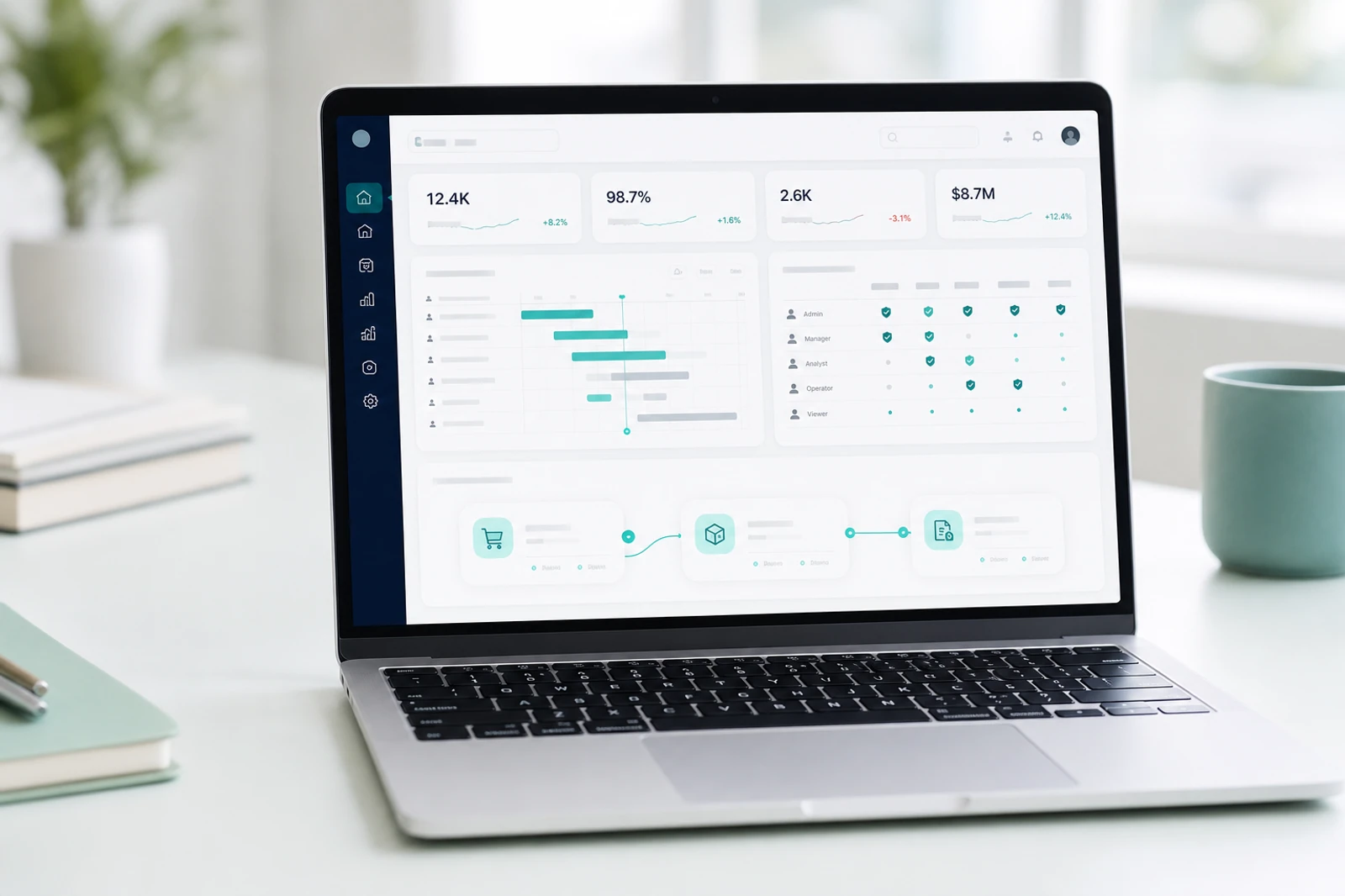
We shape internal systems, platforms, and integrations around the work your team already does, so the software fits the operation instead of forcing a new one.
Custom software development is the right move when off-the-shelf tools force workarounds. We design enterprise software and internal tools around how your team already operates: records, roles, approvals, and the reports leadership actually needs.
A typical build includes a web application, role-based access, and integrations with the CRM, ERP, inbox, or warehouse system you already run. We use React, Next.js, Node.js, and Laravel when they fit the product — not as a stack looking for a use.
SaaS platforms follow the same rule. Multi-tenant access, billing-ready architecture, and APIs that mobile or partner products can call later. The first release should be usable. The next release should not require a rewrite.
Work lives in spreadsheets, inboxes, and tools that were never meant to talk to each other. Every new hire learns the workarounds. Volume makes the cracks obvious.
We map the real workflow first — who does what, where data sits, what breaks when it is busy. Then we build the system around that: internal tools, platforms, and integrations that share one source of truth.
Operators who have outgrown generic software and need a system that matches how the work actually runs.
01
One place to run the work instead of five disconnected tools.
02
Handoffs that do not depend on memory, chat, or a spreadsheet tab.
03
Software you can keep changing after the first release.
When the workflow is the product, not a side process. If every new hire learns a spreadsheet workaround, or two systems never share a source of truth, custom software development usually costs less than another year of glue and overtime.
Yes. Most projects include API integration — CRM, ERP, payments, email, or internal databases — so the new application does not become another island. We map data ownership before we write endpoints.
Both. Internal management systems and client-facing SaaS platforms share the same engineering: authentication, permissions, dashboards, and a codebase you can extend. The difference is who logs in, not whether the software is “real.”